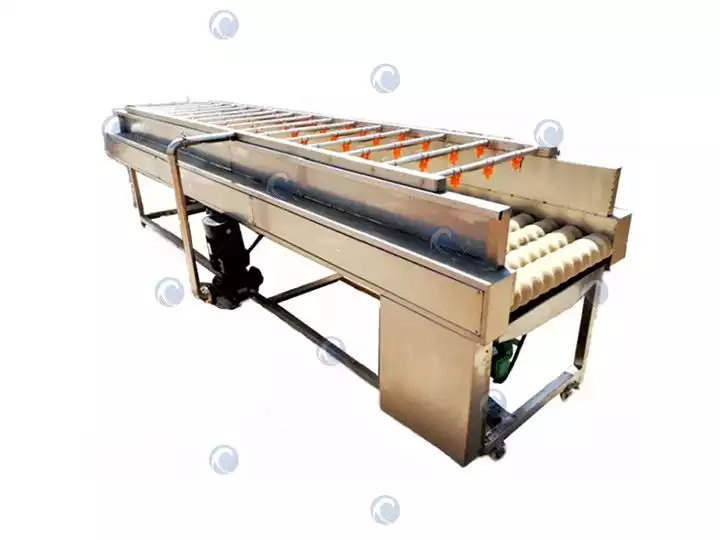
Machine de nettoyage de fruits et légumes
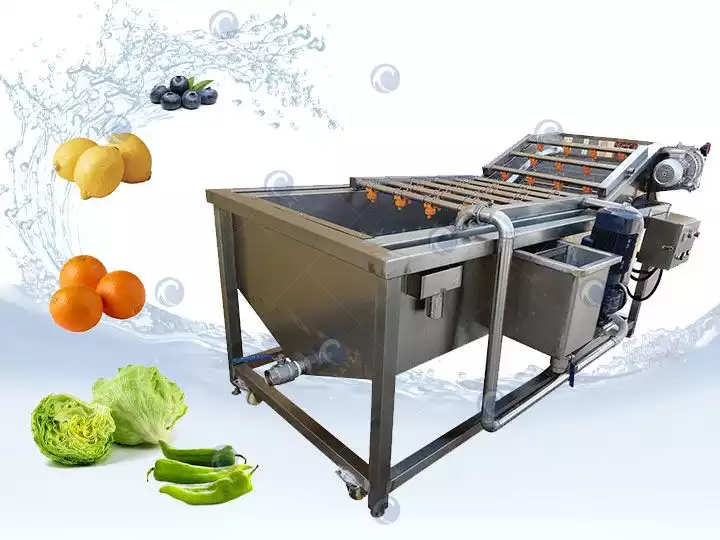
Bubble Washing Machine | Vegetable Washing Machine
Brand: Taizy
Capacity: 500-2000 kg/h
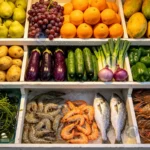
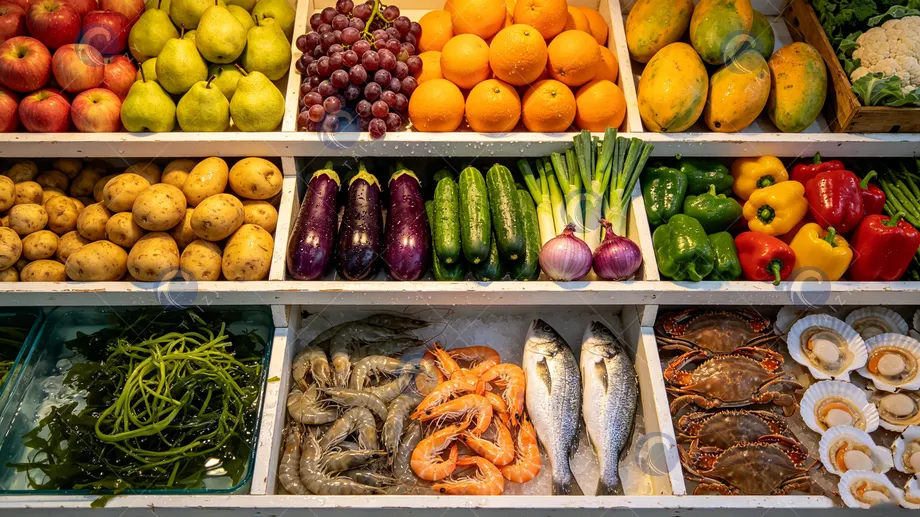
Application: Tomato, blueberry, strawberry, eggplant, cucumber, onion, pepper, lettuce, cabbage, shrimp, fish, crab, etc.
Service: Online guidance, video manual, manual book, after-sales
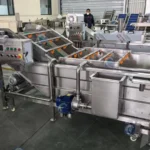
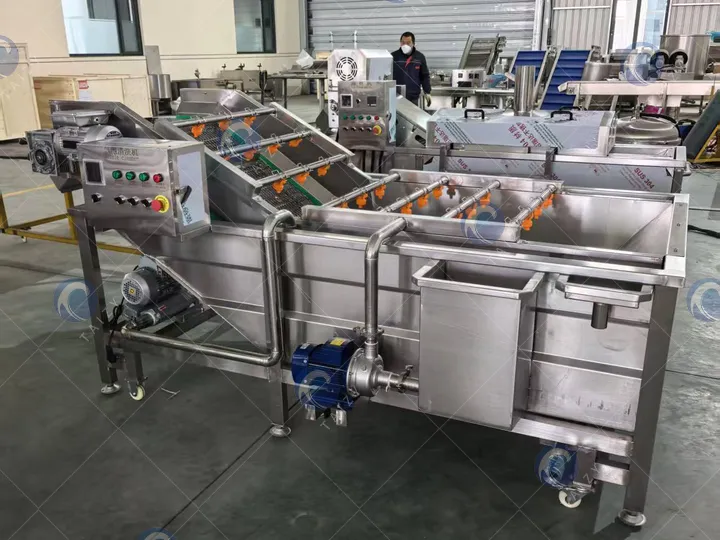
The fruit and vegetable cleaning machine uses bubble tumbling and spray technology to wash fruits, vegetables, and aquatic products. Its capacity ranges from 500kg/h to 2000 kg/h, meeting the needs of different food processors.
Taizy automatic tomato washing machines are trusted by food processors, restaurants, and commercial kitchens across Australia, Turkey, Mexico, and 30+ other countries. If interested, welcome to contact us for more details.
Why Choose Our Bubble Washing Machine?
Here’s what sets Taizy fruit and vegetable cleaning machines apart:
- High Cleaning Efficiency: Bubble tumbling combined with high-pressure spray removes dirt, pesticides, and contaminants more effectively than hand washing.
- Water-Saving: Recirculating filtration system cuts water usage by over 80% compared to conventional methods.
- Food-Grade Stainless Steel: Full SUS304 construction meets international food safety standards—no rust, no contamination.
- Continuous Operation: Automated mesh belt processes 500-2000kg/h with minimal labor.
- Versatile: Handle fruits, vegetables, and aquatic products—one machine for multiple cleaning needs.
Application of Fruit and Vegetable Cleaning Machine
This bubble -type vegetable washing machine handles a wide range of produce while preserving quality, color, and freshness.
| Category | Products |
| Fruits | Apple, pear, orange, grape, mango, peach, tomato, blueberry, strawberry, cherry, kiwi, watermelon, pineapple |
| Vegetables | Potato, eggplant, cucumber, onion, pepper, lettuce, cabbage, lotus root, sweet potato, taro, okra, carrot, celery, broccoli |
| Aquatic Products | Seaweed, seashell, kelp, octopus, shrimp, fish, crab, scallop |
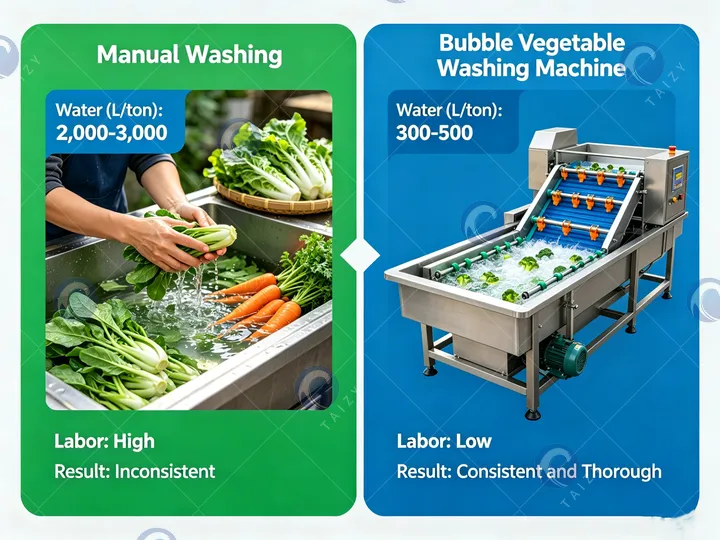
Water Savings: Manual Washing vs Bubble Washing Machine
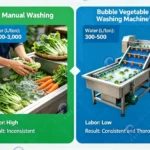
Manual washing uses 2,000-3,000 liters per ton of produce. Our recirculating system brings that down to under 500 liters—a savings of more than 80%.
| Method | Water (L/ton) | Labor | Result |
| Manual Washing | 2,000-3,000 | High | Inconsistent |
| Machine à laver les légumes à bulles | 300-500 | Low | Consistent and Thorough |
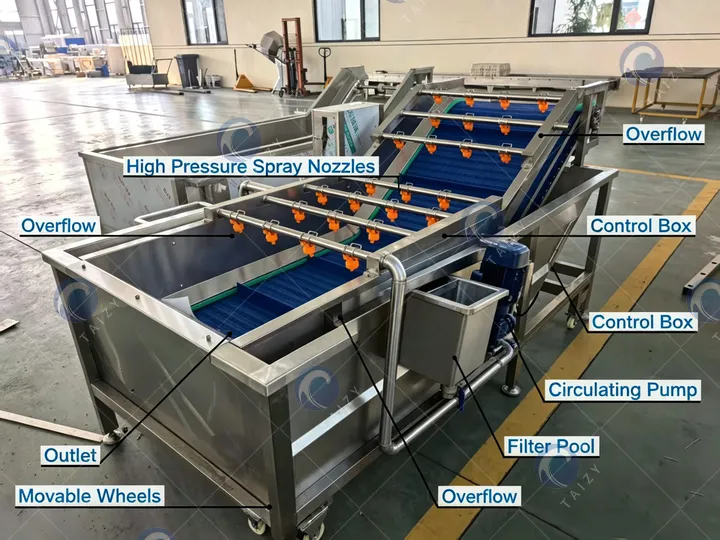
Structure of Fruit and Vegetable Cleaning Machine
Key components working together for optimal cleaning:
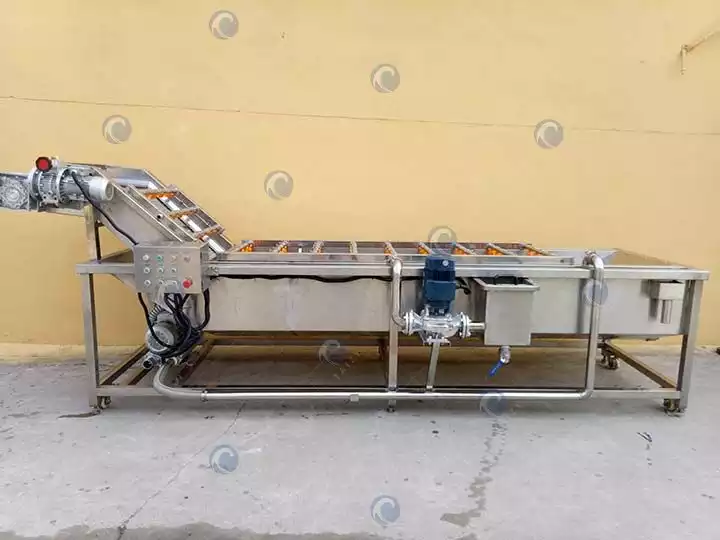
- Mesh Belt Conveyor: SUS304 stainless belt moves products through the cleaning chamber
- Spray nozzles: Multiple high-pressure nozzles throughout the chamber
- Vortex Booster: Creates powerful bubbles that reach into crevices
- Water Collection Tank: Recirculating system filters and reuses water
- Control Panel: PLC controller adjusts speed, pressure, and operation parameters
- Debris Filter: Mesh screen collects floating debris and small insects
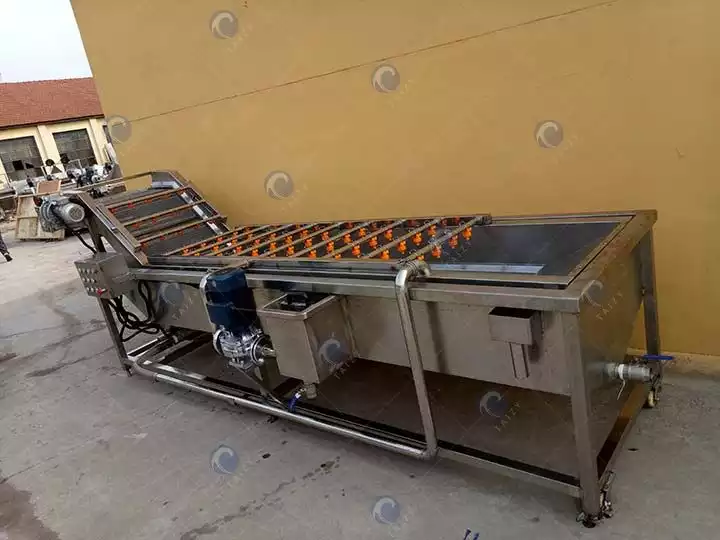
Key Features of Commercial Vegetable Washing Machine
- SUS304 Stainless Steel: Food-grade material meets international standards, never rusts, ensuring food safety.
- Secondary Spray + Recirculating Water: Filter and reuse water, saving over 80% compared to conventional washing.
- 3x Faster Than Manual: Continuous automatic operation triples washing efficiency.
- Adjustable Speed: Conveyor speed adjusts to match product type and contamination level.
How does Fruit and Vegetable Washer Work?
High-pressure water and strong bubbles work together for thorough cleaning:
- Loading: Products enter the mesh belt conveyor.
- Bubble Wash: Vortex bubbles tumble products, forcing water into all surface crevices.
- Debris Settling: Sediment sinks to the isolation bin at the bottom.
- Filtration: Floating debris and insects collect on the mesh filter.
- Spray Rinse: Products receive a final high-pressure water rinse.
- Discharge: Clean produce exits for the next processing stage.
Installation Requirements of Fruit and Vegetable Washing Machine
- Pouvoir: 380V/50Hz, 3-phase (other voltages available)
- Water: Standard hose connection, minimum 0.3MPa pressure
- Drainage: Floor drain or channel near the installation site
- Clearance: 1 meter minimum on all sides for maintenance
- Foundation: Level concrete floor to support machine’s weight
Operation Steps of Bubble Washing Machine
- Connect Power: Link main motor, mesh belt, air pump, and water pump. Test rotation direction—if reversed, swap any two power lines.
- Add Water: Fill the reservoir to the proper level.
- Set Speed: Adjust conveyor speed based on the product being processed.
- Start: Turn on the air pump, spray motor, and mesh belt—the machine begins continuous operation.
- Monitor: Check cleaning results and adjust speed or pressure as needed.
Parameters of Fruit and Vegetable Cleaning Machine
| Modèle | Puissance du moteur (kw) | Capacité de production (kg/h) | Poids (kg) | Dimensions(mm) |
| TZ-2500 | 3.75 | 500 | 180 | 2500*1000*1300 |
| TZ-4000 | 4.1 | 800 | 400 | 4000*1200*1300 |
| TZ-5000 | 5.1 | 1500 | 500 | 5000*1200*1300 |
| TZ-6000 | 5.5 | 2000 | 600 | 6000*1200*1300 |
Maintenance Tips for Bubble Washing Machine
Regular maintenance keeps the machine running efficiently and extends its lifespan:
- Daily: Check water level, spray nozzles, and belt tension
- Weekly: Clean filter screens, check for pump blockages, inspect seals
- Monthly: Lubricate bearings, check electrical connections, inspect vortex generator
- Belt Care: Adjust tightness regularly to extend belt life
- Winter Storage: Drain the water system completely to prevent freezing damage
For detailed maintenance instructions, see our vegetable washing machine maintenance guide.
FAQ of Fruit and Vegetable Washing Machine
How much water does the bubble washing machine save?
Our machine saves over 80% water compared to manual washing—typically 300-500 liters per ton versus 2,000-3,000 liters for hand washing.
What products can this machine clean?
Vegetables: potato, eggplant, cucumber, onion, pepper, lettuce, cabbage, lotus root, sweet potato, taro, okra, carrot, celery, broccoli.
Fruits: apple, pear, orange, grape, mango, peach, tomato, blueberry, strawberry, cherry.
Aquatic products: seaweed, seashell, kelp, shrimp, fish.
What is the cleaning capacity?
Capacity ranges from 500kg/h to 2000kg/h. TZ-2500: 500kg/h | TZ-4000: 800kg/h | TZ-5000: 1500kg/h | TZ-6000: 2000kg/h.
How do I maintain the machine?
Daily: check water level and nozzles. Weekly: clean filters, check pumps. Monthly: lubricate bearings, inspect connections. In cold weather: drain all water to prevent freezing.
What is the warranty?
Standard 12-month warranty covers manufacturing defects. An extended warranty is available. Contact our sales team for details.
Can the machine be customized?
Yes. We offer custom capacity, dimensions, power configuration, and options like extra spray zones, UV sterilization, or extended conveyors. Contact us with your requirements.
Complete Processing Line
For full-scale production, consider our vegetable and fruit washing and grading line —a best-seller that includes:
- Bubble washing machine – Primary cleaning
- Vegetable dryer – Removes excess water
- Vegetable grader – Sorts by size and quality
- Packaging machine – Final packaging
All machines are customizable to your materials, budget, and capacity needs. Contact us for a tailored solution.